Stair step cracks
In brick or concrete block walls.
 Call
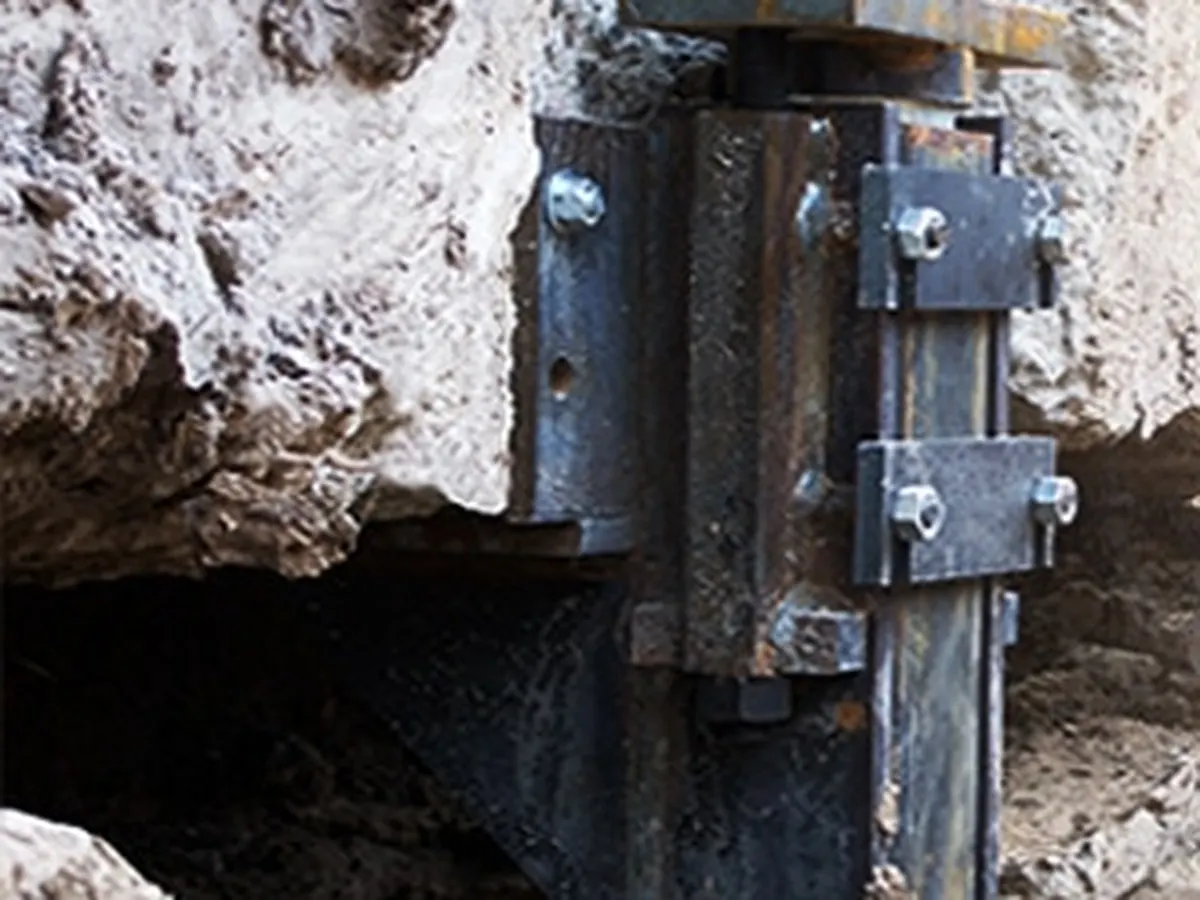
Settling, cracking, bowing walls
Protect the investment you have made in your home or business with residential and commercial foundation repair from a family-owned team serving Missouri and eastern Kansas since 1978.
The root cause
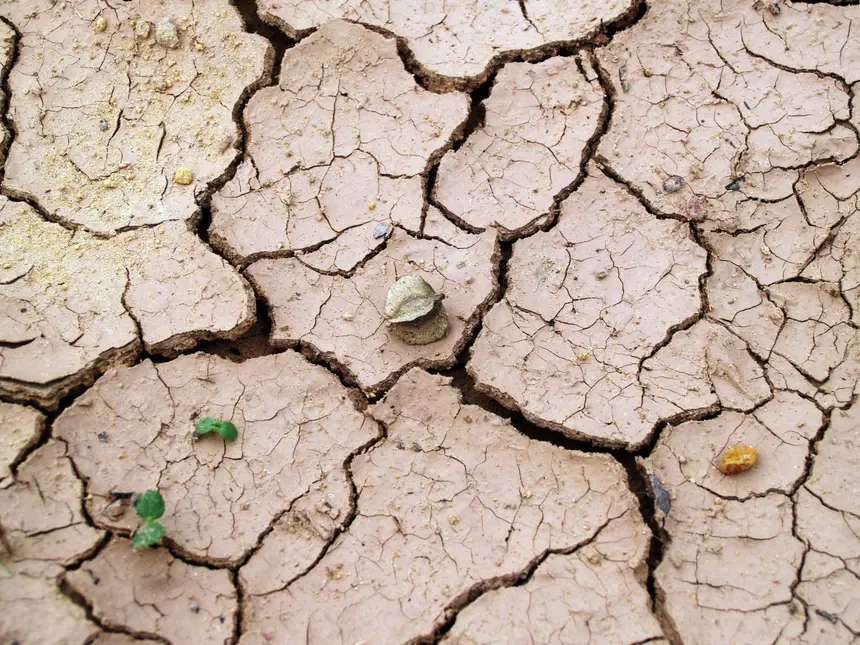
Most foundation problems start in the soil, not the concrete. Much of the Kansas City area and central Missouri sits on clay soil that swells when it gets wet and shrinks when it dries out. A wet spring followed by a dry summer can push and pull on a foundation more than you would expect. Add our freeze and thaw cycles in winter, plus downspouts that dump water right next to the house, and the soil supporting your footings can lose its grip.
When the soil under part of a foundation compresses or washes out, that section settles. When saturated soil presses against a basement wall from the outside, the wall can bow or lean inward. Either way, the problem rarely fixes itself. Cracks tend to grow, doors keep getting harder to close, and the repair gets bigger the longer it waits.
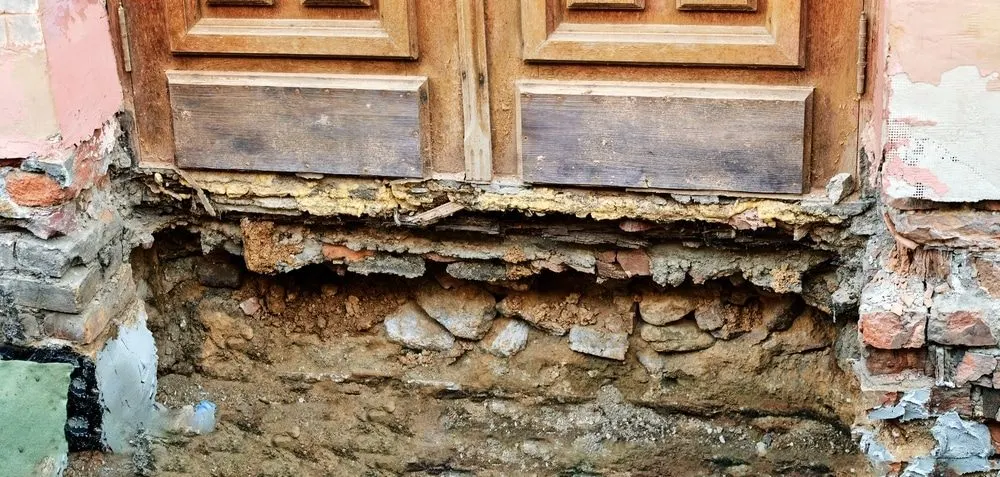 ECP underpinning
The right fix
It is important as a home or business owner to know the signs of foundation failure. We use underpinning products made by Earth Contact Products (ECP), a leading manufacturer of foundation repair and waterproofing products, and we match the repair to what is actually happening under your structure.
Know the warning signs
If you are seeing more than one of these, it is worth having someone look.
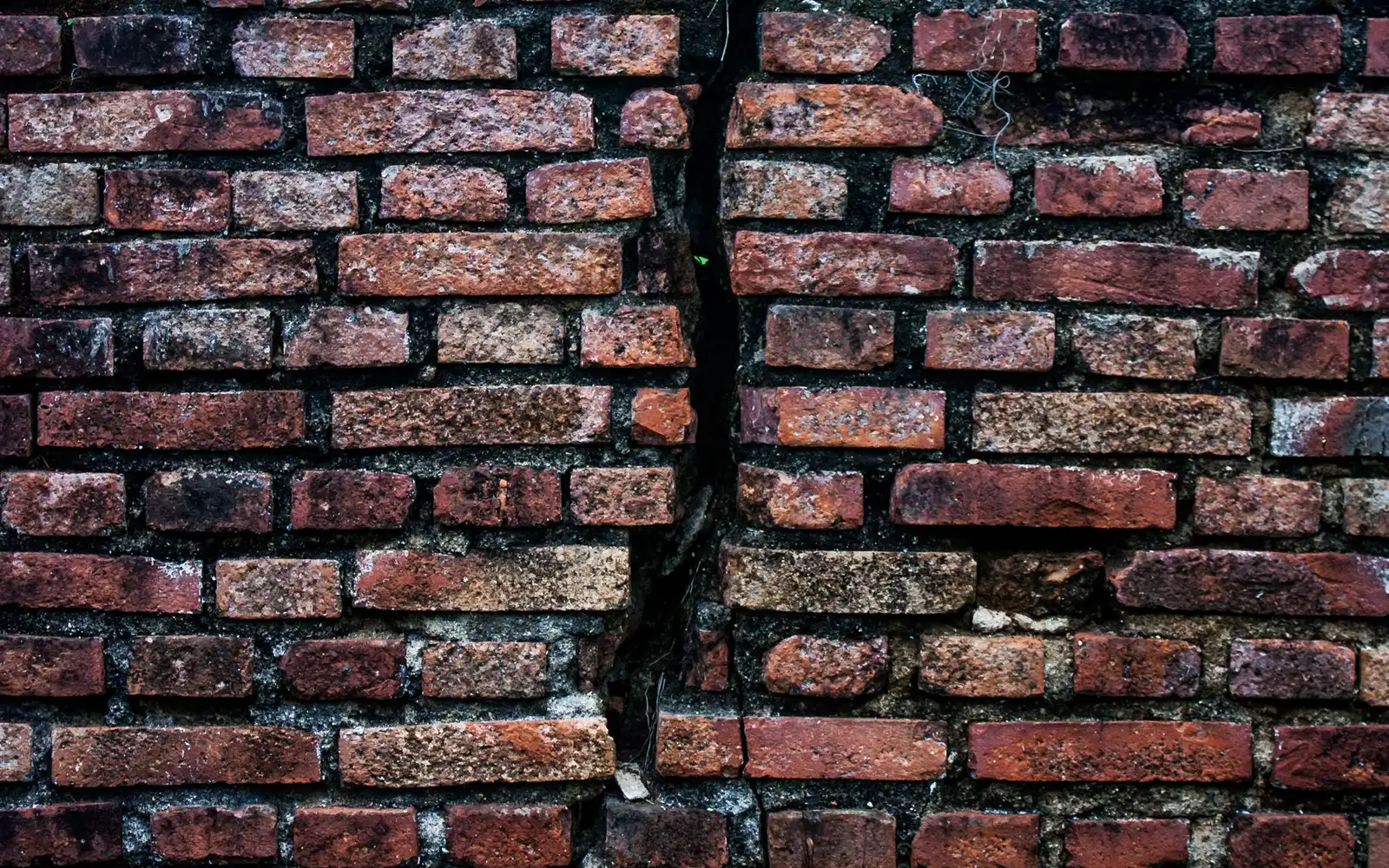
Read the cracks
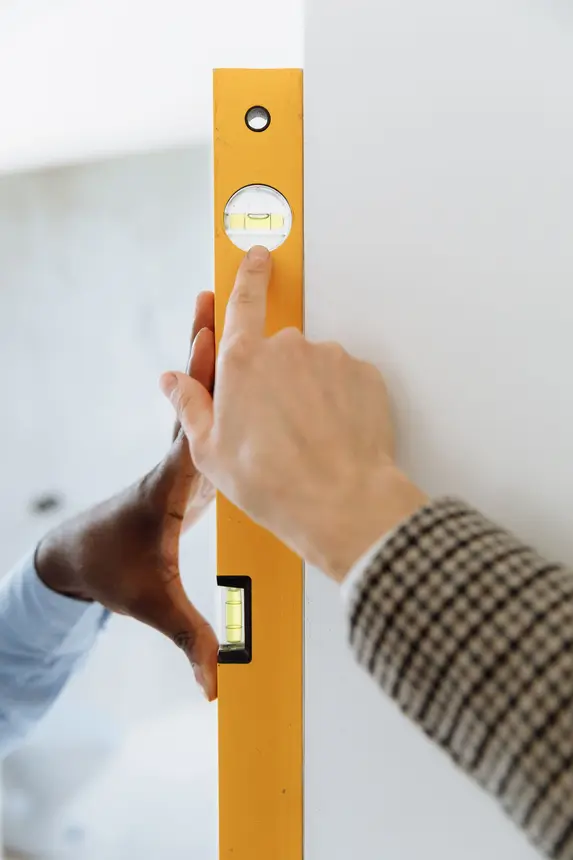
One hairline crack is not always a structural problem. A pattern is what matters.
Stair step cracks in a brick or block wall, a door that used to latch and now drags, and a gap opening between the chimney and the siding usually point to the same thing: part of the foundation is moving. Horizontal cracks in a basement wall, or a wall that looks bowed when you sight down it, point to pressure from the soil outside.
Our methods
Three proven ECP systems, each built for a different problem.
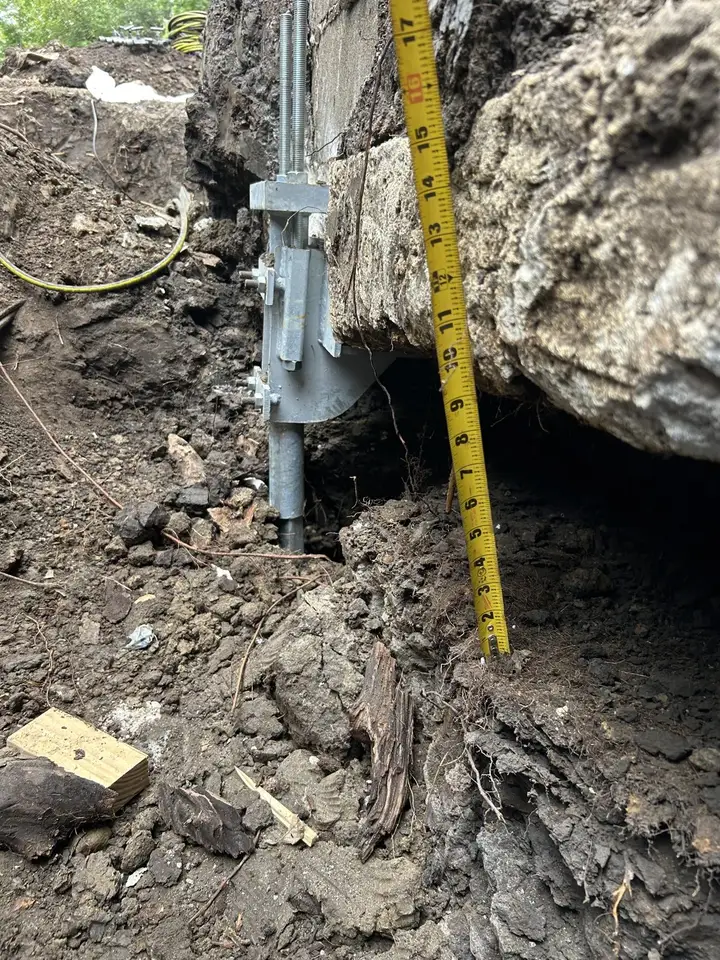
Heavy-duty steel push piers are driven down to load-bearing soils, below the shifting clay. The weight of the structure is then transferred onto the piers, which can permanently lift it back toward its original position. Piers are field load tested after installation.
For lighter structural loads, unstable rock basement conditions, or sites where load-bearing soil is very deep. Helical piers are screwed into the ground and carry the foundation on stable soil instead of the soil that has been moving.
A helical anchor is set in the soil outside the wall and connected by a high-strength rod to a plate on the inside of the wall. The tieback holds the wall against the outside pressure that was pushing it in.
Step by step
From the first call to cleanup, here is what to expect.
Call (816) 358-3300, or (913) 383-1800 in Kansas, or send a message through the contact page. Tell us what you are seeing.
We look at the cracks, the doors and windows, the basement walls, and the drainage around the house to figure out what is moving and why.
You get a plain explanation of the problem and the repair that fits it, whether that is push piers, helical piers, tiebacks, or a drainage fix.
Our crews excavate where the piers or anchors go, install the system, and stabilize or lift the structure.
We backfill, clean up after the job, and walk you through what was done.
No. Concrete shrinks as it cures, and small hairline cracks are common. Cracks that are wider than about 1/8 inch, that keep growing, that run in a stair step pattern, or that show up along with sticking doors and windows deserve a closer look.
Often, yes. Steel push piers can permanently lift a structure back toward its original position. How far a structure can be lifted depends on the building and its condition, which is why we inspect before recommending anything.
Push piers are driven down using the weight of the structure and work well for heavier loads. Helical piers are screwed into the soil and suit lighter loads, deep load-bearing layers, or difficult rock conditions. We recommend the one that fits your foundation.
Not always. Bowing walls are usually a sideways pressure problem, not a settling problem. Helical tiebacks are designed to stabilize those walls. Poor drainage often adds to the pressure, so we may also recommend waterproofing or drainage work.
Yes. We provide both residential and commercial foundation repair.
Water and concrete too
Foundation movement and water usually travel together. If water is getting into your basement, see basement waterproofing. If the problem is a sunken driveway, patio, garage floor, or slab, polyjacking and concrete leveling may be the better fit. Homes with a crawlspace can also benefit from crawlspace encapsulation.
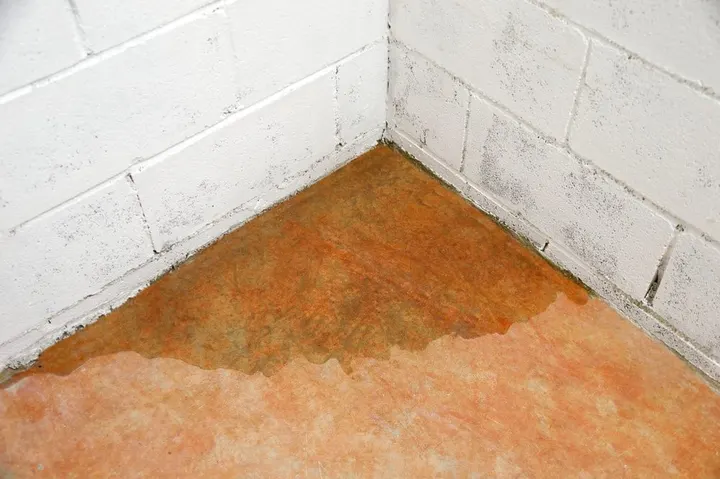 Basement waterproofingDrains, sump pumps, exterior workLearn more →
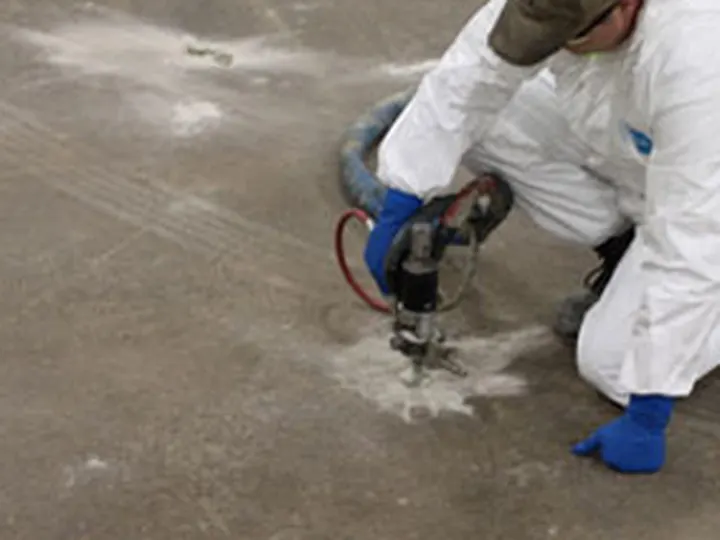 PolyjackingLift and level settled concreteLearn more →
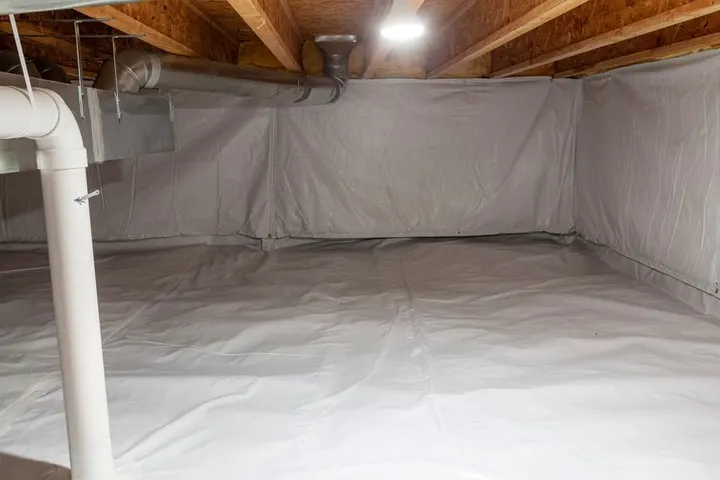 Crawlspace encapsulationVapor barrier moisture controlLearn more →
 Service areasKansas City metro, mid-Missouri, eastern KansasLearn more →
We work across the Kansas City metro, mid-Missouri, and eastern Kansas. See every city on our service areas page.
Free estimates
Call our Raytown office or our NE Kansas line to set up a free estimate.